

I was standing in my driveway with a cup of lukewarm coffee, staring at my front driver-side tire in total disbelief. It wasn’t just worn; it was practically smooth on the inner edge. I’d only put about 6,000 miles on those tires. I’m a guy who prides himself on knowing top auto repair tips to extend your vehicles lifespan, yet here I was, looking at an $800 mistake staring me in the face. I felt like a total rookie. I had the tools and the time, but I lacked the right strategy. I had been so focused on engine health and oil change innovations that I completely botched the simplest task on the list. I thought I was being smart by just swapping them front-to-back in my garage, but my car’s specific drivetrain demanded more than a lazy swap. I’d spent hours decoding vehicle diagnostics to make sure my engine was humming perfectly, yet I ignored the physics of how my car’s weight actually hits the pavement.
Stop Swapping Tires Front-to-Back Without Checking This First
The reality is that most of us treat tire rotation like a chore we can breeze through. We think as long as the wheels change positions, we’re good. That’s exactly where I went wrong. Early on, I assumed all rotations were created equal. I didn’t realize that for my front-wheel-drive sedan, a simple “straight” rotation was doing almost nothing to combat the specific diagonal wear patterns developing on the treads. If you’ve ever wondered why your tires are making a loud humming noise, you might already be halfway to the same mistake. Today, I’m going to show you how to identify the specific rotation pattern your car actually needs so you don’t end up buying a new set every few months.
Does the Direction Really Make a Difference?
You might be skeptical. After all, a tire is just a circle of rubber, right? Not exactly. According to a report by the National Highway Traffic Safety Administration (NHTSA), nearly 35% of vehicles on the road have at least one tire that is significantly under-inflated or improperly maintained, which leads directly to uneven tread wear and poor handling. Most people fear a bent control arm or a failing brake service, but the silent killer is simply rotating tires in a way that ignores their wear history. Have you ever noticed your steering wheel vibrating or seen weird “feathering” on your tire edges even right after a rotation? Before we get into the heavy lifting, we need to talk about essential auto repair strategies for frequent drivers and why the standard “back-to-front” move is often a recipe for disaster. Much like how a tire pressure mistake can kill your fuel economy, the wrong rotation path ruins your alignment’s hard work almost instantly.The first thing I do now—before I even touch a lug nut—is look for an arrow on the sidewall. If your tires are directional, they are designed to roll in one direction only. If you swap them to the other side of the car, you’re basically running them in reverse, which is a disaster for water displacement and grip. It’s like trying to walk in flippers backward; it works, but you’re going to trip eventually. Once you’ve cleared that hurdle, you need to match the movement to your drivetrain to ensure even wear.
Determine Your Car’s Drive Type Before Lifting the Jack
For most people driving a standard commuter car, you’re dealing with a front-wheel-drive (FWD) system. This means the front tires are doing the heavy lifting—steering, braking, and pulling the car forward. Because they take such a beating, they wear out significantly faster than the rears. I learned this the hard way when I ignored vehicle diagnostics explained easy checks before your road trip and ended up with cupped tires that sounded like a freight train on the highway. Identifying your drive type is the foundational step in any DIY maintenance routine.
The Forward Cross Move for Front-Wheel-Drive Vehicles
The goal here is to move the rear tires to the front but cross them. The back-left tire goes to the front-right, and the back-right goes to the front-left. The tires already on the front move straight back to the same side. This diagonal swap ensures that the tread is exposed to different friction angles, which helps smooth out any unevenness. I remember helping a buddy with his Honda last summer. He was convinced he had a failing hub, but after we performed a proper forward cross, we realized he was just hearing a wheel bearing failing sound that was actually just uneven tread slap. 
How to Handle Rear and All-Wheel-Drive Setups
If you’re rocking a truck or a performance car, you likely need the Rearward Cross. It’s the opposite of the FWD method. You move the front tires to the back and cross them (front-left to back-right, front-right to back-left). The rear tires then move straight forward. This is vital because RWD cars push from the back, creating a specific type of scuff on the rear edges. If you have an AWD system, consistency is even more critical. Mismatched tread depths on an AWD can actually stress the center differential. It’s a lot like how you wouldn’t want one leg shorter than the other while running a marathon.
Practical Tips for a Smooth Driveway Swap
Safety is non-negotiable. Don’t trust a single floor jack to hold the car while you’re messing with the wheels; always use jack stands. Also, before you start, make sure you know the secret to getting a stuck lug nut off without breaking the stud, because there is nothing worse than being halfway through a rotation and snapping a bolt. While you have the wheels off, take thirty seconds to look at your suspension components. Using the simple way to check your ball joints with a pry bar can save you a massive headache later. It’s the perfect time to perform a visual inspection for leaks, much like how you would how to spot a bad water pump before your engine overheats by simply looking for tell-tale crusty coolant trails.It’s easy to get overconfident once you have a Bluetooth scanner in your hand. We’ve been told that these little dongles are the truth-tellers of the automotive world. But here is the contrarian reality: a trouble code is not a repair manual. It is a symptom, not a diagnosis. I’ve seen guys spend hundreds of dollars replacing O2 sensors because a code popped up, only to realize later they just had a $5 vacuum leak. This parts cannon approach is the biggest mistake I see DIYers and even some pro shops make. According to the 2023 CarMD Vehicle Health Index, misinterpreting data is a leading cause of unnecessary part replacements, costing drivers billions annually. Real expertise involves decoding vehicle diagnostics by looking at live data streams, not just reading a code and reaching for the credit card.
Don’t Let a Computer Code Bully You into Parts Cannon Repairs
Most people assume that if the check engine light is off, the car is healthy. This is the ultimate trap. There are dozens of soft failures—like a slightly lazy thermostat or a degrading fuel pump—that won’t trigger a light but will absolutely kill your efficiency. When I talk about top auto repair tips to extend your vehicles lifespan, I’m talking about proactive monitoring. If you wait for the light, the damage is already being done. You need to look for those subtle shifts in how your car idles or how the transmission feels when it’s cold. For instance, knowing why your automatic transmission shifts hard when the engine is cold can help you catch a fluid issue before it becomes a full rebuild.
What Happens if You Ignore the Brake Bedding Phase?
Many drivers believe that a brake service is as simple as out with the old, in with the new. But if you’ve ever wondered why your brand new brake pads are already squealing, it’s likely because you skipped the bedding-in process. This involves a specific sequence of moderate-to-heavy decelerations to transfer a layer of friction material from the pad to the rotor. Without this layer, you get uneven heat distribution and warped rotors. This is one of those brake service myths busted what really matters for safety that separates the weekend warriors from the pros. 
The Hidden Danger of the Ten Thousand Mile Oil Change
We are living in an era of oil change innovations, but don’t let the marketing fool you. While modern synthetics are incredible, the 10,000-mile interval is often a best-case scenario that doesn’t account for stop-and-go traffic or extreme temperatures. If you’re a frequent driver, following essential auto repair strategies for frequent drivers means checking your oil level weekly. Many modern engines are designed to burn a small amount of oil by design, and waiting for a 10,000-mile mark could mean running two quarts low for months. Furthermore, you should always verify the work; knowing how to tell if your mechanic actually changed the oil is a skill every car owner should have. Whether it’s debating the truth about synthetic oil vs conventional in older high mileage cars or simply trusting your gut when a noise sounds off, real maintenance is about staying ahead of the machine. Have you ever fallen into the trap of replacing a part just because a scanner told you to? Let me know in the comments.Once you stop guessing and start measuring, the entire experience of working on your own vehicle changes. I eventually graduated from a basic socket set to a high-precision digital torque wrench. Why? Because over-tightening a spark plug or a valve cover bolt is a one-way ticket to a stripped-thread nightmare that costs ten times more to fix than the tool itself. I also invested in a bi-directional scanner that allows me to command the car’s computer to test individual components, like the fuel pump or cooling fans, without tearing the engine bay apart. This is where auto repair hacks save money without sacrificing quality; you aren’t just working harder, you are working with live data. If you are serious about keeping your vehicle for the next decade, your toolbox needs to reflect that shift from a simple fixer to a technician. 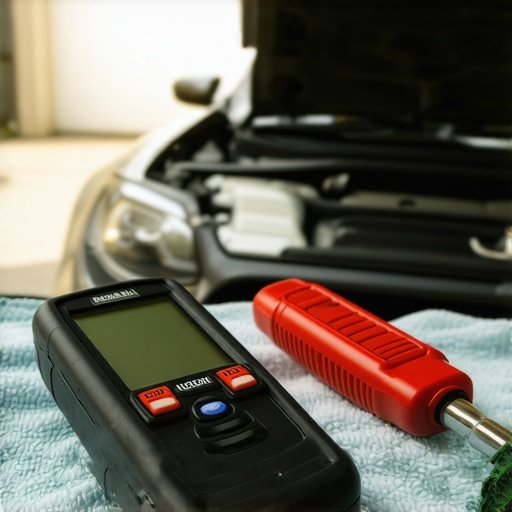
How Can I Keep This Maintenance Momentum Going for the Long Haul?
The secret to a 300,000-mile car isn’t luck; it is a documentation habit. I keep a physical logbook in my glovebox for every single fluid swap, part replacement, and inspection. It sounds old-school, but when you can see a trend of declining fuel economy over six months, you can catch a failing sensor before it leaves you on the shoulder of the highway. This is the core of top auto repair tips to extend your vehicles lifespan. Beyond just oil, you need to be looking at the rubber—bushings, hoses, and belts. If you start hearing the clunking sound in your floorboards when hitting small bumps, do not just turn up the radio. Use the simple way to check your ball joints with a pry bar to confirm the issue before the steering geometry is permanently compromised. We are rapidly moving toward an era where cars are essentially rolling computers with wheels. I predict that within the next few years, driveway mechanics will rely more on telematics data sent directly to their smartphones than on physical dipsticks. We are already seeing how advanced vehicle diagnostics prevent costly breakdowns by predicting component failures weeks before they manifest as a noise or a warning light. According to the Society of Automotive Engineers (SAE) Standard J1979, the standardization of diagnostic data has paved the way for this evolution, but the physical feel of the mechanical parts will always be the final authority. Don’t let the technology replace your senses entirely. You do not need a professional lift to start treating your vehicle like a pro-level machine. My challenge for you this weekend is to go beyond the hood and look for the invisible issues. Use the cardboard trick to find a tiny oil leak overnight. It is the simplest, most effective way to see if your gaskets are actually holding up under pressure. If you find a drip, do not panic—just start the process of decoding what that fluid is trying to tell you before it turns into a major repair bill.
Expensive Fails and Small Wins Under the Hood
After years of turning wrenches in my own driveway, I’ve realized that the car rarely lies; we just don’t always listen correctly. One of my biggest lightbulb moments was realizing that decoding vehicle diagnostics isn’t about clearing codes to pass an inspection, it’s about understanding the internal logic of the machine. I once replaced a fuel pump three times before realizing the ground wire was just loose, which taught me to always start with the simplest physical check first. Another hard-earned lesson is that a proper brake service is 50% installation and 50% preparation. If you don’t take the time to bed those new pads, you’re literally grinding your investment into the pavement. Finally, I’ve learned to trust my senses over the dashboard lights. If a tire is humming, even if the pressure is perfect, there’s a story there that needs to be read before it becomes a blowout. Knowing why your tires are making a loud humming noise is the difference between a quick rotation and a costly alignment failure.
Gear That Actually Deserves Cabinet Space
You don’t need a professional shop to get professional results, but you do need the right leverage to avoid stripping bolts or losing your mind. Here are the three things I never start a weekend without:
- A Bi-Directional Scanner: This goes beyond a basic code reader. It lets you test fans, fuel pumps, and solenoids while the engine is off, which is a key part of how advanced vehicle diagnostics prevent costly breakdowns.
- A Digital Torque Wrench: Modern engines are made of aluminum and plastic; “hand tight” is a recipe for a disaster. Precision is your best friend when applying top auto repair tips to extend your vehicles lifespan.
- A Dedicated Logbook: Tracking oil change innovations and wear patterns lets you spot a failing alternator months before the battery dies.
#IMAGE_PLACEHOLDER_E#
I also highly recommend digging into auto repair hacks save money without sacrificing quality to find creative ways to use household items—like that cardboard leak test—to keep your maintenance budget in check and your driveway clean.
Build a Car That Outlives the Financing
Mechanical empathy is a real skill. It’s the difference between a car that feels like a financial burden and one that feels like a reliable partner. By taking these steps—properly rotating your tires based on drive type, understanding your diagnostics, and performing a thorough brake service—you are doing more than just saving money. You are taking ownership of your safety and your time. The transition from a casual driver to a proactive owner is the best upgrade you can ever give your vehicle. Don’t be afraid to get your hands dirty; the car will thank you with another 100,000 miles. Have you ever had a “simple” repair turn into a weekend-long project because of one missing detail? Let me know in the comments below!