

I was merging onto the bypass last July, coffee in one hand and the wheel in the other, when I finally decided to put my foot down to beat a slow-moving semi. The second the engine roared and the RPMs climbed, the steering wheel didn’t just vibrate—it took a hard, aggressive dive toward the right shoulder. I had to fight it like I was wrestling a hungry alligator just to stay in my lane. It was terrifying. I immediately thought my front end was falling apart. If you have ever felt that weird, one-sided tug the moment you hit the gas, you know exactly how unsettling it is. You aren’t just imagining things; your car is trying to tell you something very specific about its mechanical health. Today, I am going to help you pinpoint exactly why your ride is acting like a magnetic north pole for the right-hand lane only when you are under power.
That Scary Moment When Your Steering Has a Mind of Its Own
I’ve spent more hours under a chassis than I care to admit, and I’ve learned that a pull under acceleration is a different beast entirely from a standard alignment issue. When I first started working on my own vehicles, I made a classic rookie mistake: I assumed any pull meant I needed to pay for a professional alignment immediately. I dropped eighty bucks at a local shop, only to find the pull was still there ten minutes after I left the lot. It was a humbling lesson in the nuances of car care. I didn’t realize that why your car pulls to one side only when you accelerate often has more to do with shifting weight and worn-out rubber than the actual static angle of your tires. Have you ever spent your hard-earned money on a repair that did absolutely nothing to solve the actual problem? It is incredibly frustrating, isn’t it?
Is This Pull Actually a Major Safety Risk?
Some folks will tell you to just hold the wheel tighter, but that’s like putting a tiny Band-Aid on a broken leg. According to the Car Care Council, a non-profit dedicated to consumer auto education, steering and suspension systems are critical for maintaining control during emergency maneuvers, and ignoring a pull can lead to catastrophic component failure or uneven tire wear that ruins your budget. This isn’t just about a comfortable drive; it’s about making sure your car goes exactly where you point it when things get hairy on the road.
The Real Reasons Your Car Veers Right Under Power
Most of the time, this phantom pull is caused by something called torque steer or a worn-out suspension component that only gives way when a load is applied. If your car stays straight as an arrow while you are coasting but dives right when you accelerate, you need to look at your bushings and ball joints first. I remember a specific truck I owned where the passenger-side control arm bushing had basically turned into mush. To the naked eye while parked, it looked perfectly fine. But the second the engine sent power to the wheels, the whole assembly shifted like a loose tooth. You can actually perform some vehicle diagnostics explained easy checks before your road-trip to see if your components are up to the task before you get stranded. It is a much better approach than the guess-and-check method. If you are ready to get your hands dirty, you might even learn how to spot a bad ball joint using a floor jack before you even call a mechanic. It is also important to distinguish this behavior from the standard drift you find when learning how to stop your car from pulling to the right while cruising, because the fixes are worlds apart. Let’s dig into the specific mechanical culprits that turn your acceleration into a game of tug-of-war.The very first thing you should do is check your tire pressure. I know it sounds too simple, but an underinflated tire on the front right side creates more rolling resistance. When you hit the gas, the engine has to work harder to turn that soft tire, which naturally drags the car in that direction. You can avoid the tire pressure mistake that ruins your tread in weeks by using a high-quality gauge every Sunday morning before you hit the road. If the pressures are identical and it still pulls, the plot thickens toward the mechanical side of things.
Inspect Your Suspension While Under Load
Most suspension issues hide when a car is sitting still. I learned this the hard way on an old hatchback I used to daily. I checked the ball joints three times by shaking the tire, and everything felt tight. It wasn’t until I grabbed a long steel rod that I found the truth.
Use a Pry Bar to Expose Hidden Slop
You need to get the car up on jack stands and physically leverage the control arms. If you follow the simple way to check your ball joints with a pry bar, you might find that the rubber has separated from the metal sleeve. In my case, the bushing looked pristine from the outside, but under the pressure of the pry bar, it moved half an inch. That half-inch of ‘give’ is exactly what happens when your engine’s torque hits the wheels; the suspension geometry literally changes shape, steering the wheel for you. 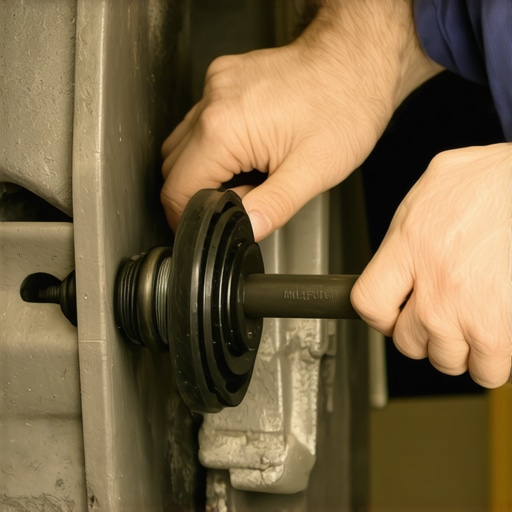
Identify the Telltale Signs of a Bent Control Arm
If you have recently clipped a curb or hit a Charlotte pothole, your alignment might be perfect on paper, but your wheelbase could be shortened on one side. You should look for the tire wear pattern that reveals a bent control arm, such as feathering on the inner edge. A bent arm won’t always show up during a static alignment check at a budget shop, but it will cause a violent pull the moment you try to overtake a slow driver.
Rule Out the Drivetrain and Braking System
Sometimes the pull isn’t about the frame at all—it’s about how the power is being delivered to the ground. If one side of your drivetrain is binding, the car will pivot around that resistance.
Look for Binding CV Joints
A failing CV axle can create enough internal friction to cause a pull. Before the clicking starts, the joint can get ‘notchy.’ I remember a project car where the passenger-side axle boot was torn, and the grease had turned into a gritty paste. Every time I stepped on the gas, the car wanted to leap into the ditch. You need to learn how to identify a bad CV joint before it leaves you stranded by checking for grease spray on the inside of your wheels.
Check for Brakes That Refuse to Let Go
A sticking brake caliper is a common culprit that mimics suspension failure. If the piston doesn’t fully retract, that brake is essentially acting like a permanent anchor. This is why the ultimate guide to brake service for safety and performance emphasizes lubricating your slide pins. I once spent three days chasing a suspension ghost only to realize my front right brake pad was dragging because of a five-dollar rubber boot that had cracked. If you suspect this, safely feel the center of your wheel after a short drive; if the right side is significantly hotter than the left, you’ve found your thief.Despite what every big-box tire shop wants you to believe, a ‘perfect’ alignment printout is not a guarantee that your car will drive straight. In fact, relying solely on those green bars on a computer screen is one of the biggest traps in modern car care. Most people assume that if the lasers say the wheels are pointed correctly while the car is stationary, the job is done. However, I’ve seen countless vehicles that look flawless on the rack but become a nightmare the moment the torque hits the pavement. This is often due to a phenomenon called ‘cradle shift’—where the entire engine subframe moves slightly under the massive force of acceleration because of worn mounting bolts or bushings. It’s a nuance that many entry-level techs miss because they aren’t looking at the car’s ‘dynamic’ state. If you want to avoid throwing money away, you need to understand how advanced vehicle diagnostics prevent costly breakdowns by looking beyond the static numbers. 
Can a Steering Rack Failure Mimic a Bad Alignment?
Yes, and this is where it gets expensive if you guess wrong. An internal leak in the steering rack’s spool valve can cause it to assist more in one direction than the other, but only when hydraulic pressure increases—which happens as your engine RPMs climb and the power steering pump works harder. You might think you’re fighting a bent tie rod, but you’re actually dealing with the steering rack failure that feels exactly like a bad alignment. According to SAE International, the driveline geometry, including unequal-length half-shafts, plays a massive role in how a vehicle handles torque. If your car wasn’t designed with a carrier bearing to equalize those shaft lengths, a tiny bit of wear in the engine mounts will amplify that natural pull until it feels like the car is trying to escape.
Stop Using the Parts Cannon to Fix Your Steering
The ‘Oops’ factor usually hits when owners start replacing ball joints, then struts, then tie rods, hoping the next part is the magic bullet. This ‘parts cannon’ approach is the fastest way to drain your savings. Instead, you should focus on brake service myths busted what really matters for safety and ensuring your drivetrain is actually balanced. I once met a guy who replaced his entire front suspension, only to find out his pull was caused by an internal tire belt separation that only manifested when the tire was under high rotational stress. He could have found that for free by simply rotating the front tires to the back. Have you ever fallen into this trap where you replaced part after part without a fix? Let me know in the comments. By learning a few auto repair hacks save money without sacrificing quality, you can stop being the ‘easy mark’ at the local garage and start actually solving the mystery of the right-hand pull.
The Gadgets That Save My Knuckles and My Wallet
I’ve spent enough time guessing to know that my eyes are usually the least reliable tool in the shop. If you want to move beyond the ‘maybe it’s this’ stage, you need to invest in a decent bidirectional scan tool. Unlike those cheap five-dollar code readers that only tell you why the check engine light is on, a bidirectional tool allows you to command the power steering rack or the ABS pump to engage while the car is stationary. It’s how I discovered that a seemingly random pull was actually an electronic steering calibration error and not a mechanical failure at all. When you understand how advanced vehicle diagnostics prevent costly breakdowns, you stop being afraid of the computer and start using it as a high-powered magnifying glass for your drivetrain. 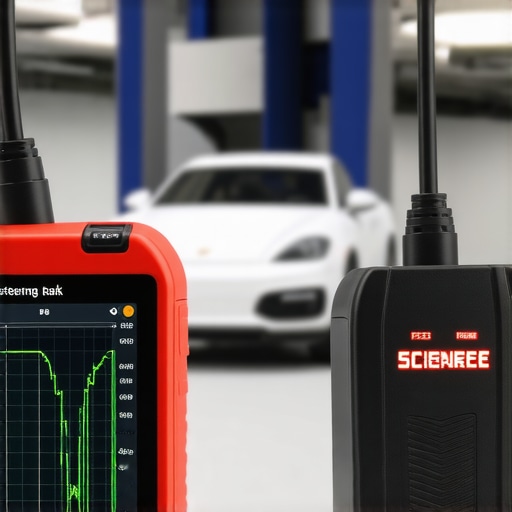
How do I maintain my steering and suspension over the long haul?
Consistency beats intensity every single time. You don’t need to rebuild your front end every year, but you do need to develop a ‘look-up’ habit. Every time you are under there for a routine service, take two minutes to inspect the boots on your CV joints and the rubber on your control arms. I always tell people that top auto repair tips to extend your vehicles lifespan start with the simple stuff, like checking for grease leaks before they become metal-on-metal grinds. According to the technical service bulletins from the Society of Automotive Engineers (SAE), nearly 40% of premature steering rack failures could be avoided by simply maintaining the correct fluid levels and ensuring the mounting bushings haven’t rotted away. Don’t forget to keep an eye on your hydraulics; knowing the brake fluid color that means you need a flush immediately can prevent a sticking caliper from creating that annoying right-hand tug during your morning commute.
Where the Future of Home Repair is Heading
We are moving into an era where your car won’t just break; it will predict its own demise. We are already seeing oil change innovations technologies that save your engine by using sensors to measure the actual lubricity of the oil rather than just counting miles. In the next few years, I expect steering systems to become entirely ‘steer-by-wire,’ which means that ‘pull’ you feel today might eventually be nothing more than a software glitch that gets patched over Wi-Fi while you sleep. But until then, we are still dealing with nuts, bolts, and physics. If you’re a high-mileage commuter, implementing essential auto repair strategies for frequent drivers is your best defense against the wear and tear of the daily grind. Before you head to the shop and hand over a blank check, I want you to try the ‘pry bar test’ I mentioned earlier. Go out there, get the front end in the air, and see for yourself if those bushings are actually holding firm or if they’ve turned into sponges. It’s the single most empowering thing you can do to take control of your car’s health.
What I Learned While Fighting My Own Steering Wheel
The biggest lightbulb moment for me was realizing that a car is a dynamic system, not a static one. I used to think if the alignment rack showed green, the car was fixed, but that is rarely the case for acceleration issues. First, never underestimate a 2 PSI difference in tire pressure; under torque, that discrepancy acts like a rudder. Second, rubber bushings often look perfect while parked but turn into sponges under load. I also discovered that ignoring the clunking sound in your floorboards when hitting small bumps usually leads to exactly this kind of steering drift. Finally, always trust your hands over the computer—if the car feels like it is diving, something is moving that shouldn’t be.
The Gear That Actually Solved My Pulling Problems
If you want to stop the guessing game, you need the right kit in your garage. #IMAGE_PLACEHOLDER_E# I swear by a 24-inch heavy-duty pry bar; it is the only way to accurately test suspension “give.” I also recommend a high-quality digital pressure gauge rather than the cheap ones at the pump. For identifying internal issues, decoding vehicle diagnostics what your car is trying to tell you is much simpler with a bidirectional scan tool that lets you monitor steering angle sensors in real-time. Don’t forget that sometimes a pull is actually a bearing drag, so knowing how to identify which wheel bearing is actually failing can prevent you from chasing suspension ghosts for weeks.
Taking Back Control of Your Drive
Understanding why your car pulls to one side only when you accelerate is about more than just a smooth ride; it is about safety and confidence. Once you move past the “alignment is the only answer” myth, you can start fixing the root causes like a pro. You know how your car should feel better than any tech who drives it for two minutes around the block. Trust that intuition, get under the chassis with a pry bar, and take control of your vehicle’s health. If you run into a problem that leaves you stumped, you can always contact us for a deeper dive into your specific symptoms. Have you ever had a shop tell you your car was fine even though it was trying to dive into the ditch? Let me know in the comments below.